Power
The UPMSat-2 power generation and management system consists of:
- Battery
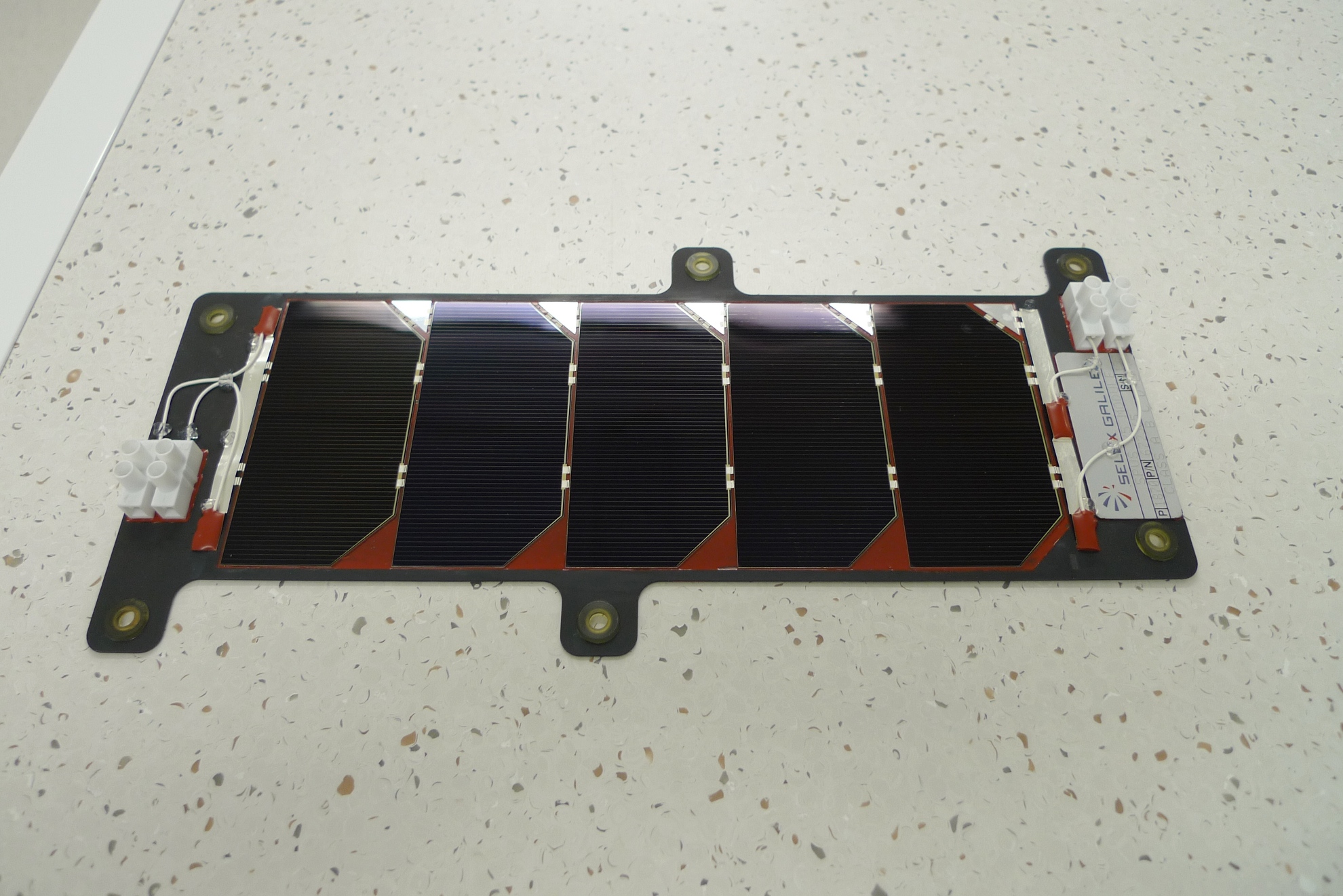
- Solar panels
- Distribution system
Distribution system
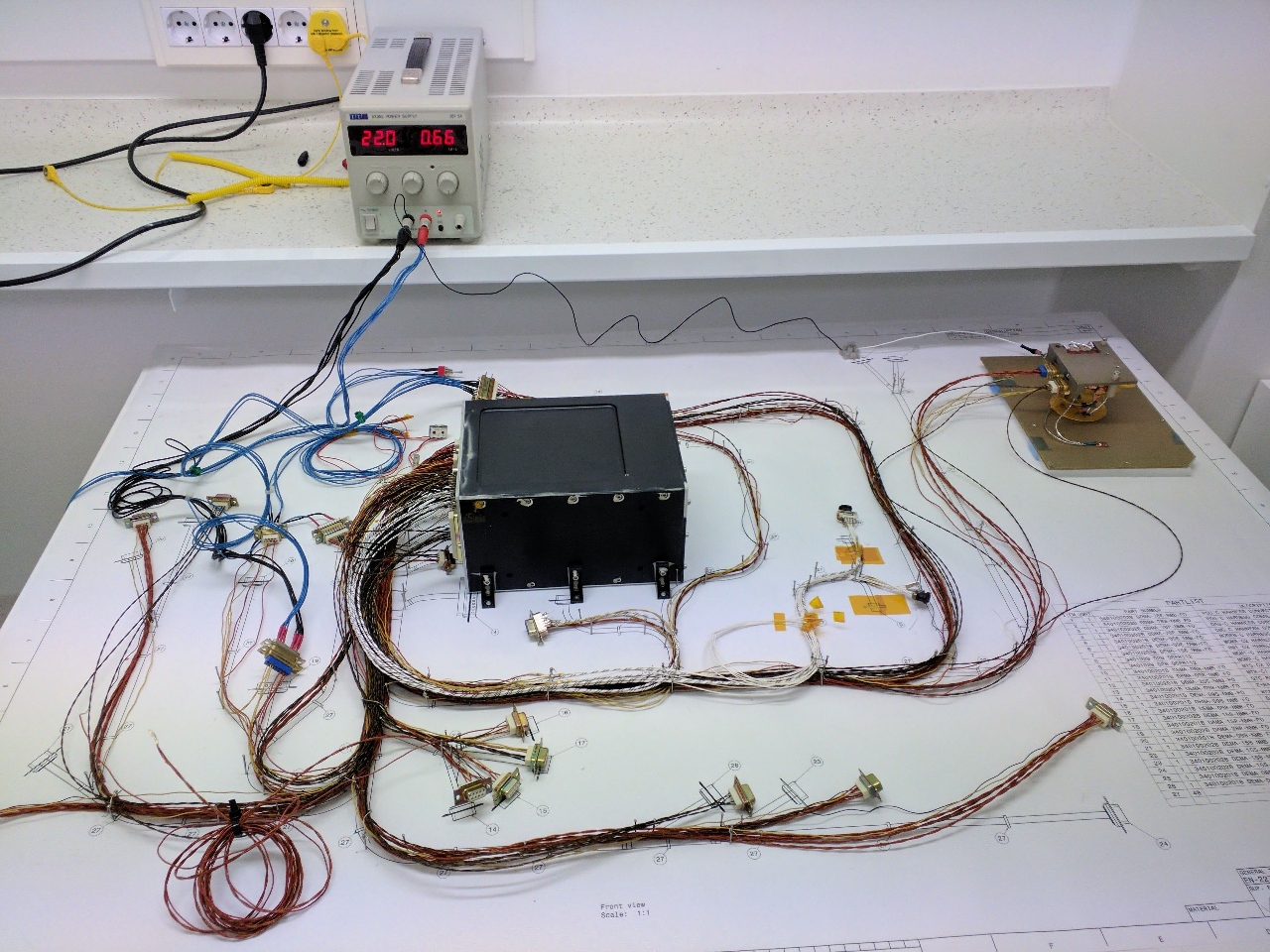
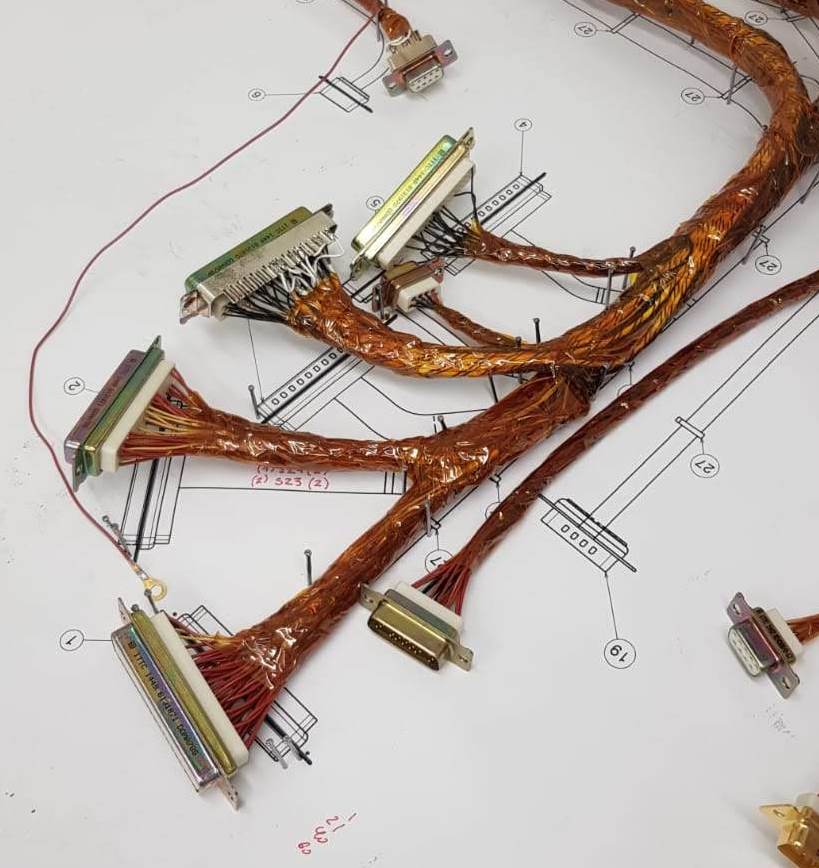
The development, testing and installation of the UPMSat-2 cabling, which includes tasks of a very different nature such as:
- 3D design using CATIA.
- Ordering of all possible connections.
- Cutting cables, soldering and crimping pins.
- Taping with kapton,
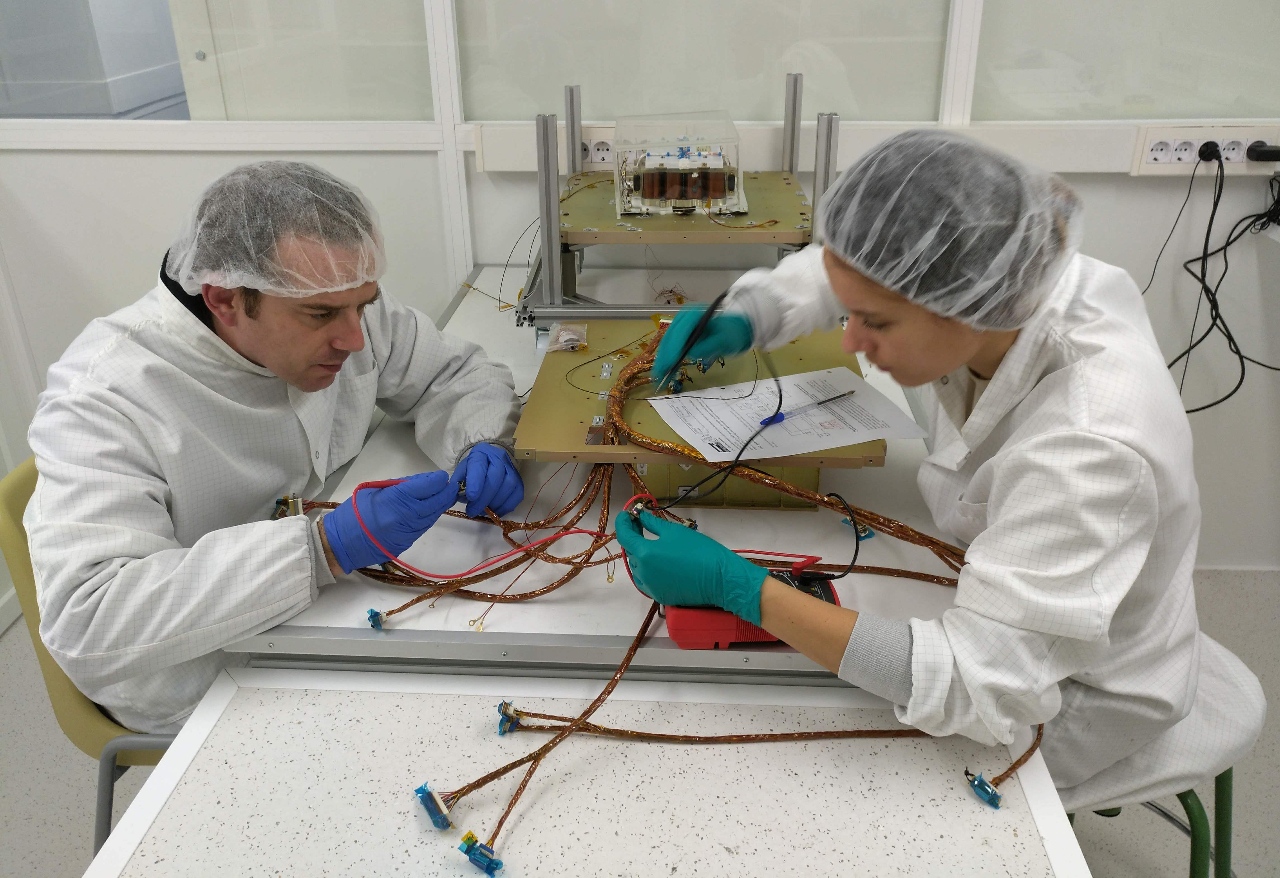
acceptance tests
was carried out by Prof. Elena Roibás, Laboratory Technician Rafael García and Prof. Javier Pérez. Other professors such as Prof. Ignacio Torralbo, Prof. Javier Piqueras and Prof. Santiago Pindado collaborated in the final phases of installing the cabling in the UPMSat-2, since this is a complex task that requires the collaboration of at least two people. It must also be said that the UPMSat-2 cabling has involved MUSE students in different phases of its design and development. For example, we can mention the work included in the Case Studies of Ms. María Amparo González de la Aleja Cabana and Mr. Juan Bermejo.
The control of the electrical power distribution is carried out through the E-BOX, which integrates:
the on-board computer (OBC – On Board Computer),
the electrical power acquisition card (PSU – Power Supply Unit), which connects panels and batteries to the EBOX, and transforms the BUS voltage into the working voltages: +3, +5, +15, and -15 V.
the power distribution card (PDU – Power Distribution Unit),
the data acquisition card (DAS – Data Acquisition System),
the communications card (COMM), developed by EMXYS.
The E-BOX has been developed by TECNOBIT together with the professors of the Real-Time Systems and Architecture of Telematic Services group (STRAST – Real-Time Systems and Architecture of Telematic Services), Prof. Jua Zamorano, Prof. Juan Antonio de la Puente, Prof. Jorge Garrido and Prof. Alejandro Alonso. On behalf of the IDR/UPM Institute, the work of Prof. Javier Pérez and Prof. Elena Roibás in the mechanical design of the E-BOX must be highlighted once again.